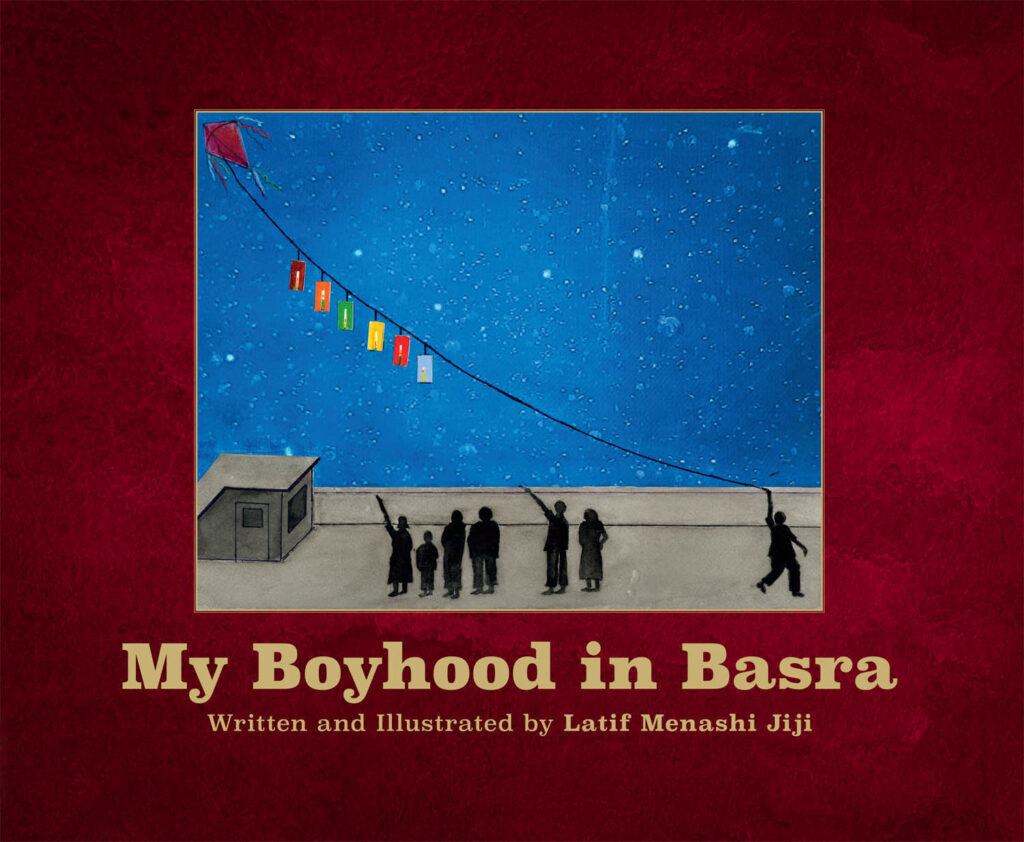
 I decided to create this illustrated book about my life growing up Jewish in Iraq not because there is anything special about my personal experiences, much as I treasure them, but because of their historical context.
My ancestors belonged to a tribe that had been brought in captivity to Babylon in 597 BC and, given the option to leave some 60 years later, chose instead to stay. After that time, they flourished in the country and had influence beyond its borders. Through hundreds of years of Ottoman rule up to the British occupation in 1918 and the subsequent reign of King Faisal, they had a place in society.
I was born in 1928 and came of age during a time when Iraq finally emerged as an independent nation. Like virtually all of my peers, I was fiercely nationalistic and patriotic, proud to live alongside all citizens united under the new Iraqi flag.
In the Iraq of my childhood, there were no Jewish ghettos or even quarters. Our neighbors in Basra were Muslim, Christian, Persian, Armenian, Bahai and more. Relations were cordial and friendly. My family had a Shia Muslim family and a Sunni Muslim family that were both very close to us. Our friendships with each remained strong through three generations. We were also close to Kurds, and my
mother traced her family roots to Iraq’s Kurdish north.
In 1947, the partition of Palestine by the United Nations rewrote the map of the Middle East and the fate of all those in it. When I secured an opportunity to study in the United States, my father said, “I will miss you but don’t come back.” It was a measure of how uncertain the situation had become.
Within three years, the majority of Iraqi Jews were forced to renounce their citizenship and accept exile. Many were airlifted to Israel where the Jewish population was predominantly European. On arrival, the Iraqis and other ‘oriental Jews’ were forced to undergo a cultural transformation. The irony was that in Iraq we were Jews but in Israel we were Arabs, effectively minorities in both.
These events brought to an end, within my lifetime, a history that had spanned thousands of years.
That history—its traditions, language and values—lives in my heart. The pull of my childhood is something I feel every day. Even more than 75 years after leaving Iraq, I still love nothing more than to speak to others who remember that time and place: our friends, neighbors and relatives; the
mulberry trees, palm trees, and eucalyptus trees; the foods and festivals; the summer heat, dust storms and brilliant stars in the sky.
None of it ever faded from my memory, and I recount it here with gratitude.
Latif Menashi Jiji, New York City, 2025